Sub-Total: $0.00
ZINC-8 Description
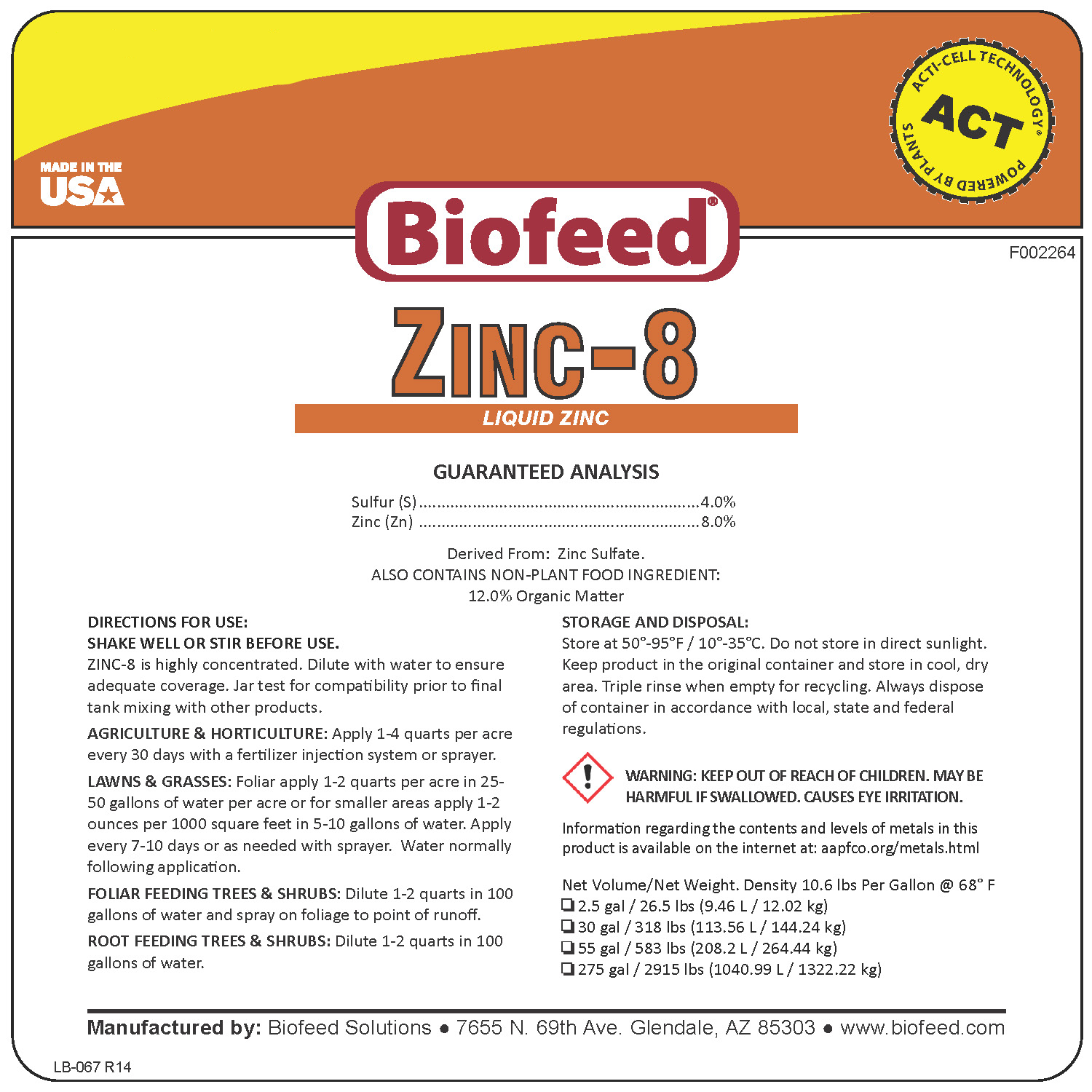
ZINC-8 Supports vital biochemical reactions in all turf, plants and crops. Zinc activates enzymes that are responsible for the synthesis of certain proteins. Zinc is used in the formation of chlorophyll and some carbohydrates, and conversion of starches to sugars. When present in proper ratios, zinc helps the plant to withstand cold temperatures. Zinc is also essential in the formation of auxins, that help with growth regulation and stem elongation.
Zinc deficiencies usually stunt plant growth, and result in decreased number of tillers, chlorosis in smaller leaves, slow crop maturity, spikelet sterility and inferior quality of crops.
Benefits of Use
Guaranteed Analysis
Zinc (Zn)…………………………..8.0%
Sulfur (S)………………………….4.0%
Derived from Zinc Sulfate.
ALSO CONTAINS NON-PLANT FOOD INGREDIENT:
12.0% Organic Matter
Application
SHAKE WELL OR STIR BEFORE USE.
ZINC-8 is highly concentrated for pro-level performance and value. Dilute with water to ensure adequate coverage. Jar test for compatibility prior to final tank mixing with other products.
AGRICULTURE & HORTICULTURAL: Apply 1-4 quarts per acre every 30 days with a fertilizer injection system or sprayer.
LAWNS & GRASSES: Foliar apply 1-2 quarts per acre in 25-50 gallons of water per acre or for smaller areas apply 1-2 ounces per 1000 square feet in 5-10 gallons of water. Apply every 7-10 days or as needed with sprayer. Water normally following application.
FOLIAR FEEDING TREES & SHRUBS: Dilute 1-2 quarts in 100 gallons of water and spray on foliage to point of runoff.
ROOT FEEDING TREES & SHRUBS: Dilute 1-2 quarts to 100 gallons of water.
| Label | Technical Bulletin | Safety Data Sheet |
|---|---|---|
| English |
English |
English |
| Spanish |
Spanish |
Spanish |
| Portuguese |
Portuguese |
Portuguese |
| French |
French |
French |
Terminology
AUXINS | A plant hormone which causes the elongation of cells in shoots and is involved in regulating plant growth.
CHLOROPHYLL | A natural compound present in green plants that gives them their color. It helps plants to absorb energy from the sun as they undergo the process of photosynthesis.
PLANT HORMONE | Determines the formation of the root, stem, leaf, and flower and facilitate the shedding of leaves and the development and ripening of fruits.
PROTEIN SYNTHESIS | Proteins are important in all cells and do different jobs, such as incorporating carbon dioxide into sugar in plants and protecting bacteria from harmful chemicals.
SULFUR | Used in the formation of amino acids, proteins, and oils. It is necessary for chlorophyll formation.
ZINC | Hormone production and internode elongation.

Availability
United States of America
2.5-gallon (9.46 L) jugs
30-gallon (113.56 L) drum
55-gallon (208.2 L) drum
275-gallon (1040.99 L) tote
Other Countries
10-Liter (2.64 gal) jug
208-Liter (54.95 gal) drum
1040-Liter (274.74 gal) tote
AERO™ Aerobic Bio-Digestor
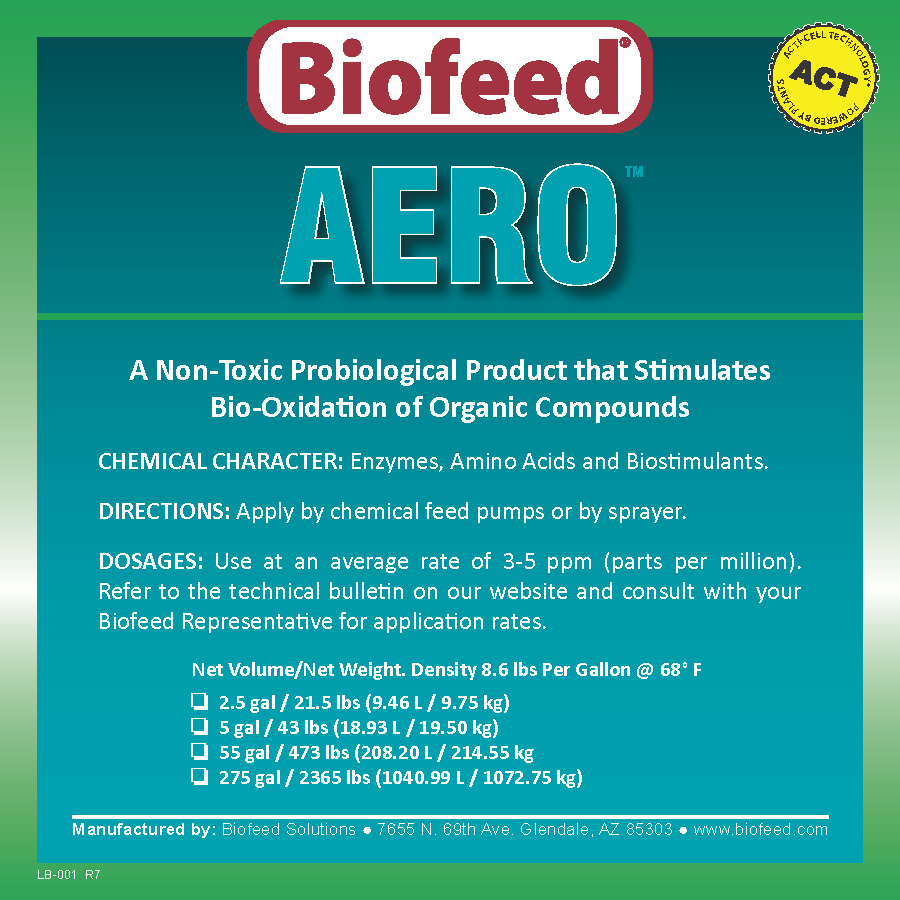
AERO™ Aerobic Bio-Digestor manages the biological imbalance in waste systems created by a lack of oxygen and hydrogen. An environment lacking free oxygen/hydrogen enables the proliferation of bad-smelling, unwanted, odorous, noxious, and anaerobic bacteria. These odorous conditions exist due to inefficient protein and carbon/sulfur degradation resulting from insufficient dissolved oxygen/hydrogen and subsequent tertiary compounds to support continuous bio-oxidation reactions.
During the metabolic processes, microbes are at work producing digestive enzymes that break down organic matters, such as cellulase, protease, lipase, phosphatase, urease, and chitinase, all of which are secreted by bacteria and fungi in the environment during the feeding stage. However, when these microbes grow they quickly use virtually all of the available oxygen and usually die off or turn anaerobic and die as these microbes cannot thrive in the absence of oxygen/hydrogen. Likewise, the produced enzymes cannot function in an environment that is deficient in dissolved oxygen and hydrogen. The solution is to continuously supply elemental oxygen and hydrogen through application of H₂O dehydrogenase enzymes, which cleave the water molecule, releasing elemental oxygen and hydrogen, thus improving the bio-environment through their continuous enzymatic release.
Results
AERO™ Aerobic Bio-Activator promotes the release of oxygen and hydrogen by providing natural H2O Dehydrogenase Enzymes that support aerobic biological and biochemical processes which naturally assist digestive enzymes to break-down or reduce organic and chemical compounds through the process of bio-oxidation of the waste at an accelerated rate in waste management systems.
Ingredients
Contains: Organic Nitrogen (Amino Acids), H2O Dehydrogenase Enzymes and Biostimulants.
Application
Apply by chemical feed pumps or by sprayer. Use at an average rate of 3-5 PPM (parts per million). Refer to the technical bulletin on our website and consult with your Biofeed Representative for application rates.
Availability
United States of America
2.5-gallon (9.46 L) jugs
5-gallon (18.93 L) pail
55-gallon (208.2 L) drum
275-gallon (1040.99 L) tote
Other Countries
10-Liter (2.64 gal) jug
20-Liter (5.28 gal) pail
208-Liter (54.95 gal) drum
1040-Liter (274.74 gal) tote